
A lot of the public discussion around AI and software development still tends to swing between two extremes.
On one side, there is the idea that AI will replace developers entirely. On the other, there is the assumption that AI coding tools are mostly hype and that very little has fundamentally changed.
Neither perspective really lines up with what is happening inside modern development environments.
What seems to be changing most is not the existence of software development itself, but the mechanics around how software gets built, refined, deployed, and maintained over time.
The easiest way to describe it is probably this: software development is becoming significantly more iterative than it used to be.
Historically, there was a considerable amount of operational friction attached to development workflows. Requirements gathering, sprint planning, backlog prioritization, testing cycles, deployment coordination, release management, and post-launch refinement all introduced delays between identifying a problem and implementing a solution.
Even relatively small application changes could move slowly once those layers accumulated.
That operational drag shaped how businesses interacted with technology teams for years. Many organizations became accustomed to software evolving more slowly than the business itself simply because the cost and complexity of iteration were high enough that constant refinement became impractical.
Modern AI-assisted development environments are beginning to compress those cycles fairly dramatically.
Part of that comes from code generation itself. Developers are no longer starting from zero every time they build interfaces, workflows, integrations, or application structures. AI tools are accelerating execution across a wide range of repetitive development tasks.
But the larger shift is probably happening around the workflows surrounding development.
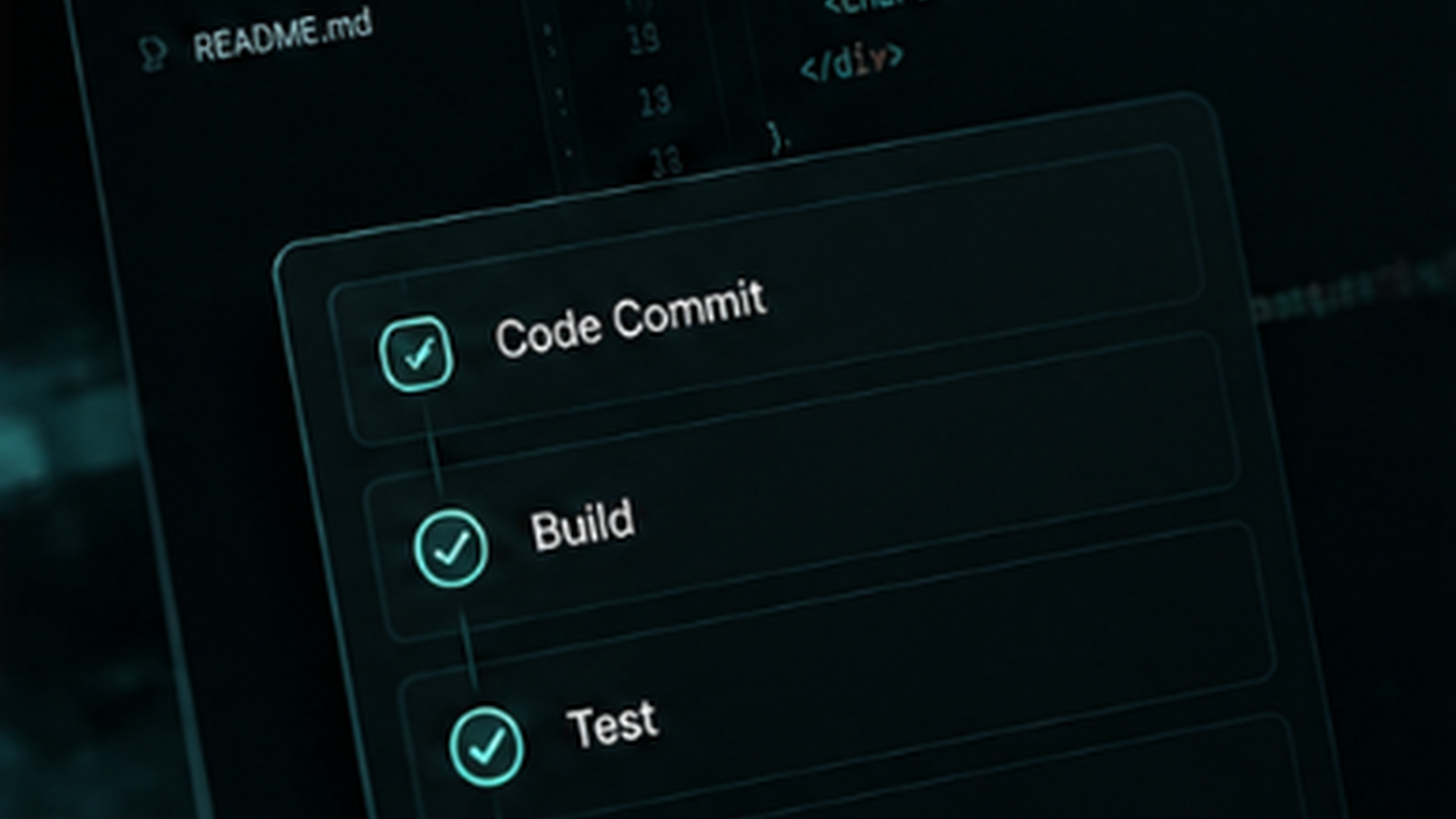
AI is increasingly being used inside connected engineering environments that include structured repositories, deployment pipelines, staging environments, cloud infrastructure, and continuous iteration workflows. Once those systems are operating together, software development starts behaving differently than it did under older development models.
The distance between an operational idea and a deployed refinement becomes much shorter.
That does not mean software suddenly becomes easy to build. If anything, faster iteration tends to expose poor architecture and weak engineering discipline more quickly. Systems still require thoughtful design, maintainability, security, governance, and operational alignment.
In some ways, experienced technical leadership becomes even more important once development velocity increases.
Bad systems can now evolve quickly too.
One of the more interesting changes happening underneath all of this is that software development is becoming less linear and more conversational. Historically, software projects often followed fairly rigid implementation structures. Gather requirements, define scope, develop features, deploy, then revisit improvements later.
Increasingly, applications can evolve through ongoing operational feedback loops. Teams identify friction points, test improvements, refine workflows, and deploy incremental changes continuously instead of waiting for major release cycles.
That changes how organizations think about experimentation.
Historically, software changes often carried enough cost and disruption that businesses became cautious about modifying operational systems too frequently. The process itself created hesitation.
As iteration becomes faster and deployment becomes less disruptive, companies gain more flexibility to evolve software alongside changing business needs instead of treating systems as relatively static implementations.
That has fairly broad implications beyond development teams themselves.
It changes how organizations think about operational workflows, internal tools, customer experiences, and even product development cycles. In many environments, software is starting to behave less like a fixed asset and more like an evolving operational layer that continuously adapts over time.
The organizations benefiting most from this shift are generally not the ones treating AI as a shortcut to eliminate engineering discipline. They are usually the teams combining AI-assisted development with strong operational understanding, structured development practices, and continuous refinement workflows.
That combination appears to be where the larger long-term shift is happening.